
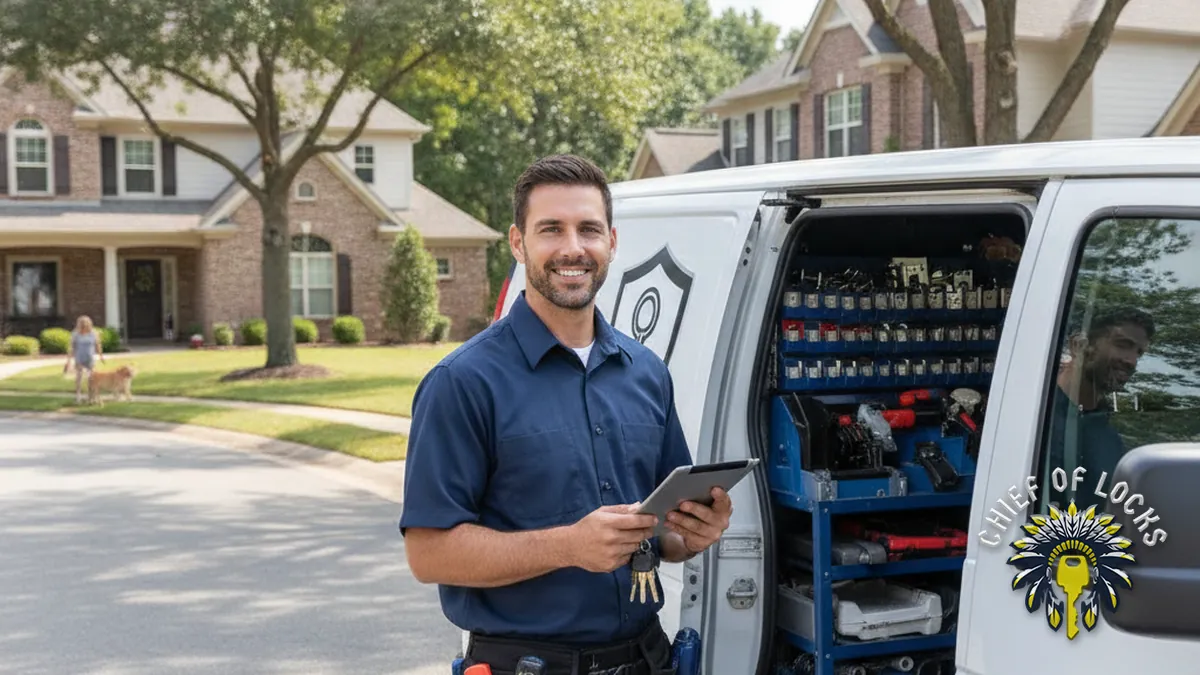
Quick answer: most locksmith scams start with a fake online listing and a price that is too good to be true, like a $19 lockout that turns into a $500 bill on site. This guide shows Indianapolis consumers how to spot locksmith scams and find a legitimate locksmith.
Locksmith scams are common because people call in a panic during a lockout. A few simple checks before you call protect your money and your home.
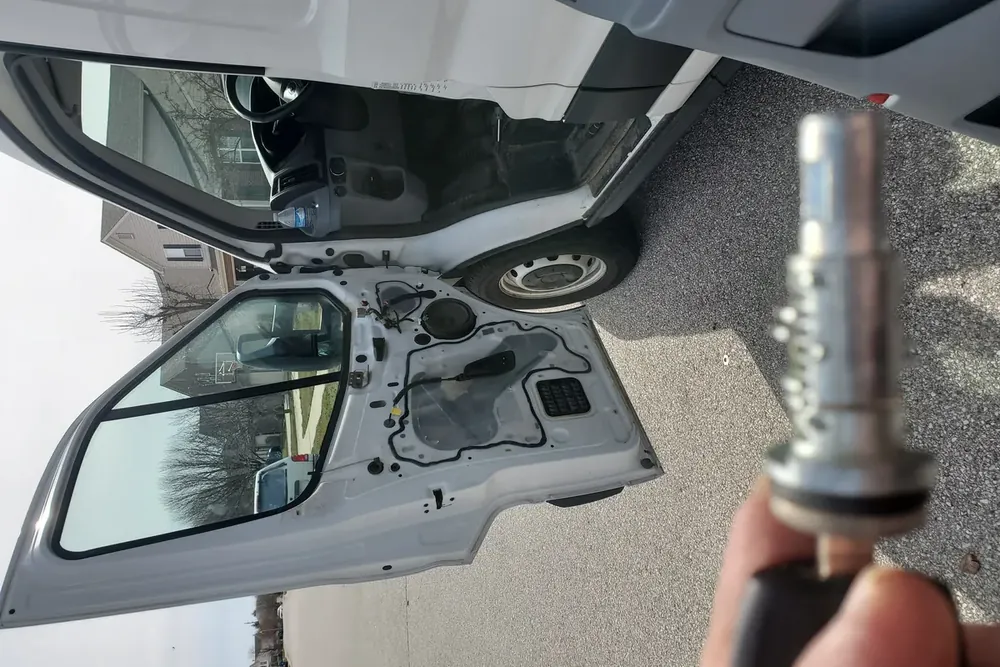
Why You Are a Target During a Lockout
A locksmith scam works because you are stressed and calling from the curb. When you are locked out, you want anyone to come fast, so you skip the checks you would normally make before calling a service.
That is exactly what a scam counts on. Slowing down for one minute before calling is the single best way to avoid a locksmith scam and save your money.
How Locksmith Scams Work
Most locksmith scams run the same play. A fake locksmith business posts a cheap price online, sends an unmarked car, then charges far more once the work is done.
These scammers are not local. Many use a call center that routes your lockout to whoever is nearby, so the person at your door may have little training and no license.
The whole system is built to deceive consumers. The business you thought you were calling may not exist at all, which is the first sign of a scam.
Warning Signs of a Locksmith Scam
Learn the warning signs and a scam is easy to spot. Watch for these red flags before and after you call.
- A price far below everyone else, like a $19 or $29 service call
- No business name when they answer the phone, just "locksmith"
- An unmarked car and no ID or license when they arrive
- A refusal to give a written estimate before the work starts
- A demand to drill your lock on a simple job that needs no drilling
- Cash only, or pressure to pay before you can think
Scammers often advertise a low price to get to your door, then claim the lock is "high security" and charge over $500. Some even claim to be police recommended to gain your trust.
Fake Listings and Fake Reviews
Many locksmith scams live on fake business listings. A scammer creates dozens of fake map pins with names similar to real shops, so the search results look local when they are not.
Check the reviews with a careful eye. A legitimate locksmith has steady Google reviews over time with real names. Google even filed a lawsuit against fraudulent locksmith companies in 2023 for flooding Google Maps and search engines with fake listings.
Search the exact business name plus Indianapolis and read the Google reviews and the map. A real local locksmith business has a stable address, a consistent phone number, and reviews that mention real jobs, not a wall of five-star reviews posted in one week.
The Bait-and-Switch Price Trick
The bait-and-switch is the heart of most locksmith scams. The advertised price gets them the job, and the real charge lands once your car or door is open.
A simple lockout should be a flat, fair price, not a surprise. If the person quotes one price on the phone and a much higher price at your door, stop and do not pay. That gap is the scam.
Another sign is a demand for cash before the job. A real locksmith service will show a business name, give a number you can call back, and take a card. Scammers avoid a paper trail, so cash-only pressure is a clear scam warning.
How to Verify a Legitimate Locksmith
A few checks confirm a real, local locksmith before you hand over any money. Do them while the phone is ringing.
- Ask for the full business name and a local address, then search it
- Confirm a local Indianapolis phone number, not just a generic line
- Read the Google reviews and look for a real website
- Ask for a written estimate or a firm price range up front
- Confirm the locksmith is licensed and insured
A professional service will answer with its business name, give you a clear price, and arrive in a marked vehicle. Chief of Locks is a licensed, local Indianapolis locksmith with real Google reviews and upfront prices. Call (317) 671-7873.
What a Real Locksmith Looks Like
A real technician arrives in a marked vehicle, often in a uniform, and can provide a license number and clear details about the job.
They explain how they will open the lock before touching it. Ask what state license they hold and how they plan to get in without drilling the lock.
A legitimate locksmith will provide those details without a fuss and never claim you need an expensive new lock for a simple lockout. Calling a company that answers these questions calmly is a good sign.
What to Do If a Locksmith Scams You
If you were overcharged, act fast. Do not let the shock stop you from fighting the charge.
Contact your bank or card company to contest the charges as fraud. If you paid by debit card or credit card, you have a better shot at a refund than with cash. File a report with the local police and the Federal Trade Commission so the scammers are on record. You can verify a locksmith through the Associated Locksmiths of America. The FTC explains how to spot and avoid locksmith scams.