
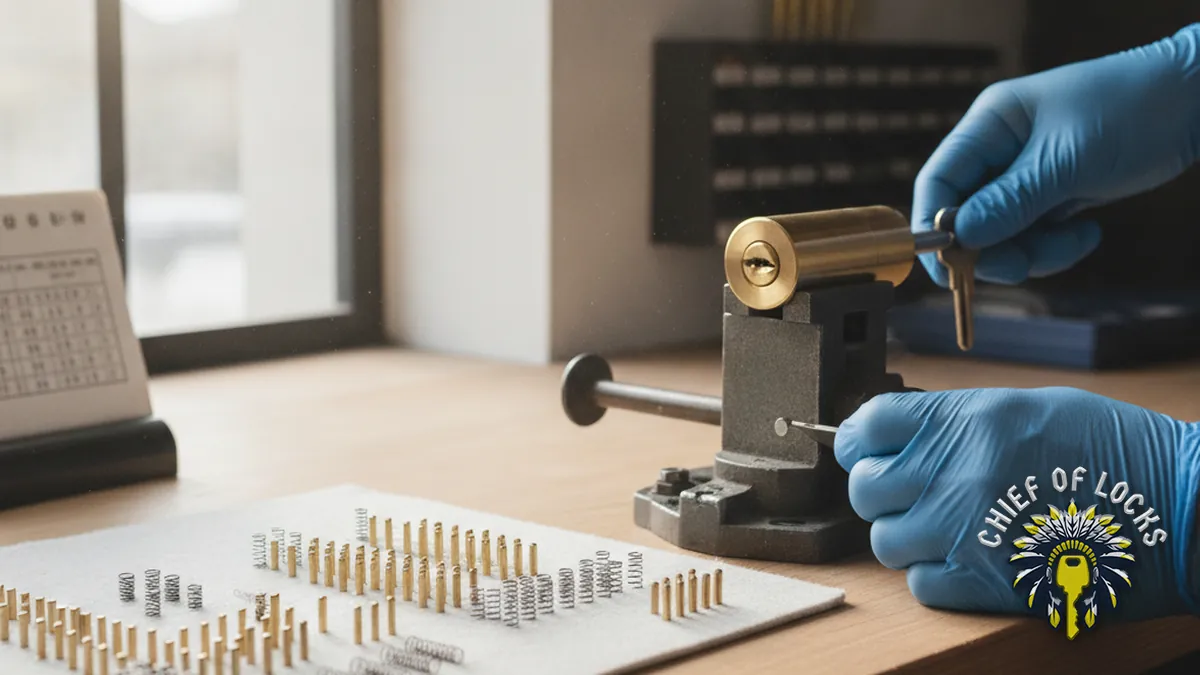
Quick answer: yes, you can rekey locks yourself with a rekeying kit if you are patient and handy. Rekeying a lock means changing the pins inside the lock cylinder so old keys no longer work and new keys do. This guide is for Indianapolis homeowners deciding between a DIY rekey and hiring a locksmith.
Rekeying is one of the most common home security tasks. Rekeying a lock is cheaper than changing the whole lock, and it keeps your existing lock hardware on the door.
Below we cover what rekeying a lock means, the exact steps to rekey a lock yourself, the rekeying kit and tools you need, the cost, and when a professional locksmith is the smarter call.
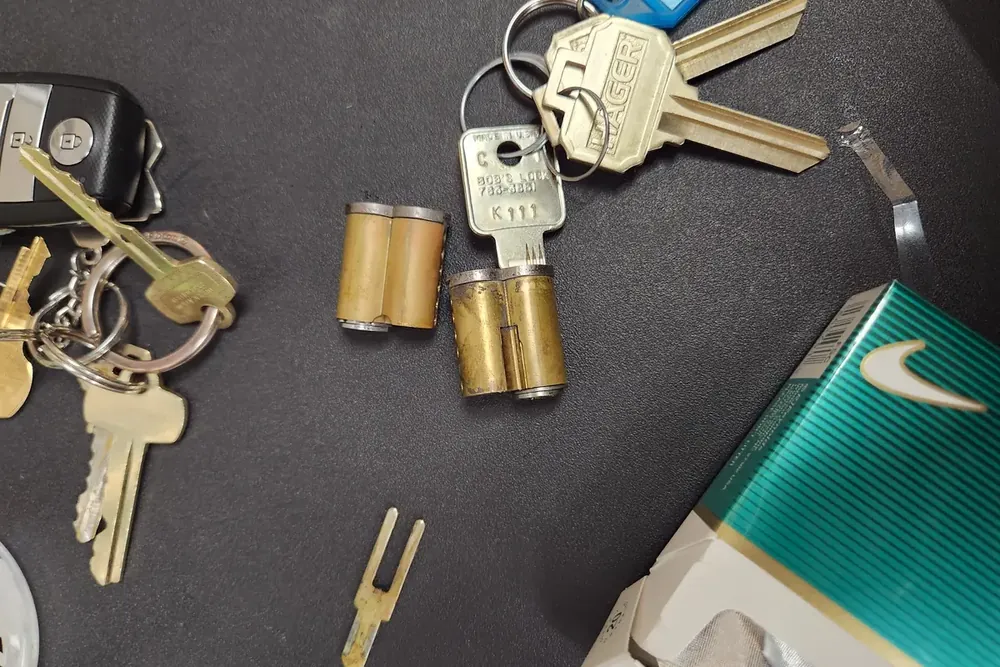
Why Homeowners Rekey Locks
People rekey locks for a few clear reasons. The most common is moving into a new home, when you have no idea how many old keys are floating around.
Rekeying a lock makes every old key stop working at once. You get new keys, and the old keys are dead. That is a fast home security win for a low cost.
Other reasons to rekey a lock include losing a key, a breakup or a moved-out roommate, or wanting the front door, back door, and garage lock to share one key. Rekeying handles all of these without changing the lock.
What Rekeying a Lock Actually Means
Every pin-and-tumbler lock has a cylinder with small spring-loaded pins. The right key pushes those pins to the exact height that lets the plug turn and the lock open.
Rekeying a lock swaps the old bottom pins for new pins that match new keys. The lock body, the knob, and the deadbolt all stay on the door. Only the pins and the keys change.
Because the lock itself does not change, rekeying is quicker and cheaper than replacing the lock. You keep the same lock and simply get new keys that fit the new pins in the cylinder.
This is the key difference between rekeying and changing a lock. Rekeying edits the inside of the lock. Changing the lock throws the whole lock away and installs a new one.
DIY Rekeying: The Kit and Tools You Need
To rekey a lock yourself, you need a rekeying kit that matches your lock brand, such as Kwikset or Schlage. A rekeying kit is brand-specific, so buy the kit that fits your lock.
A basic rekeying kit includes the tools and the new pins for the job. Here is what a typical rekeying kit contains.
- A follower tool to hold the top pins while you remove the plug from the lock
- A plug follower sized to your lock cylinder
- A set of new pins in several sizes
- One or two new keys cut to a fresh pattern
- A pinning tray and tweezers to insert the pins
You also need a screwdriver to remove the lock from the door. Set aside 20 to 30 minutes for your first lock, and less time for each lock after that.
Two extras help a lot: a key gauge to read pin sizes, and safety glasses in case a spring pops out. A dab of graphite lubricant during reassembly keeps the locking mechanism smooth. Rekey kits are sold at most hardware stores, and one rekey kit covers many locks of the same manufacturer.
How to Rekey a Lock Yourself, Step by Step
The rekeying process is the same for most knob and deadbolt locks. Work slowly, because the tiny pins are easy to lose. Follow each step in order and keep the parts in a tray.
Step 1: Remove the Lock from the Door
Unscrew the knob or the deadbolt and remove the lock from the door. Take the lock apart until you can reach the cylinder and the plug. Keep every screw in the tray so nothing rolls away.
Step 2: Remove the Cylinder Retainer
Insert the existing key and turn the plug a little. Carefully remove the retainer ring or c clip that holds the lock cylinder together. This frees the cylinder plug so it can slide out.
Step 3: Slide In the Follower and Push Out the Plug
Hold the follower tool against the back of the plug. Push the plug out the front while the follower slides in behind it. The follower keeps the top pins and springs inside the lock so they do not fly out.
Step 4: Swap the Pins to the New Key
Remove the old key and dump out the old bottom pins from the plug. Insert the new key, then drop in the new pins from the kit until each pin sits flush with the top of the plug. This step is the heart of rekeying a lock.
Step 5: Reassemble and Test the Lock
Slide the plug back into the cylinder, pushing the follower out the back as you go. Replace the retainer, reinstall the lock on the door, and test the new keys several times. Test with the door open before you close it, so a mistake does not lock you out.
Rekeying a Kwikset vs a Schlage Lock
Kwikset and Schlage are the two brands most Indianapolis homes use, and each has its own rekeying kit. A Kwikset kit only works on a Kwikset lock, and a Schlage kit only works on a Schlage lock.
Kwikset also makes SmartKey locks that rekey with a special tool and the original key in seconds, with no pins to handle. Standard Kwikset and Schlage locks use the full pin-swap process above. Locks from the same manufacturer share a kit, but different brands each need their own rekey kit, so a door knob and a deadbolt from two makers mean two kits.
Common DIY Rekeying Mistakes
Most rekeying problems come from rushing. Knowing the common mistakes helps you avoid them.
- Losing the tiny pins or springs when the plug comes out too fast
- Mixing new pins with old pins so the new keys bind
- Buying the wrong kit for the lock brand
- Forcing the plug and scratching the cylinder
- Skipping the test with the door open and getting locked out
If you take your time and keep the pins in order, rekeying a lock is very doable. If you feel stuck, stop and call a locksmith before you damage the lock.
DIY Rekeying Pros and Cons
A DIY rekey has real upsides, but it is not for everyone. Weigh these points before you start on your locks.
- Lower cost: a rekeying kit runs about $12 to $25 and rekeys several locks of the same brand
- Learn a skill: once you learn the process, future rekeys are quick
- Downside: the tiny pins are easy to lose or mix up
- Downside: a kit only works on one brand, so mixed locks need more kits
- Downside: high-security and smart locks are harder and often need a pro
When to Call a Professional Locksmith
A professional locksmith rekeys locks every day and carries pins for every brand. If you have many locks, high-security cylinders, or no time, a locksmith is faster and less frustrating than a DIY rekey.
A locksmith can also rekey all your locks to one new key, so a single key opens the front door, back door, and garage. That service is called keying alike, and it is hard to do well with a beginner kit.
Chief of Locks is a licensed mobile locksmith in Indianapolis. The team rekeys locks at your home, cuts new keys on site, and can key every lock alike in one visit. Call (317) 671-7873 for fast rekeying service.
Cost: DIY Kit vs a Locksmith
A DIY rekeying kit costs about $12 to $25. You reuse the kit on other locks of the same brand, so the price per lock drops fast after the first lock.
A locksmith rekey in Indianapolis runs about $20 to $30 per lock plus a service call, and new keys are a few dollars each. Full professional rekeying often runs $50 to $100 including labor, and locksmiths may charge $40 to $100 for the service call itself.
For one or two locks, DIY saves the most money. Rekeying multiple locks in one visit is more cost effective than a single lock at a time. For a whole house of locks or high-security hardware, a locksmith is worth the cost.
Rekey or Change the Lock?
Rekeying keeps your lock and only changes the keys. Changing or replacing the lock swaps the whole lock for a new one. Rekeying is cheaper and faster when the lock still works well.
Replace the lock instead of rekeying when the lock is worn, damaged, or you want a new style or a smart lock. If the lock turns smoothly and looks good, rekeying is the better value every time.
Keeping your existing door lock and rekeying it costs far less than replacing the door lock. Knowing when to rekey and when to replace comes down to the condition of the lock and how many keys you want to carry.
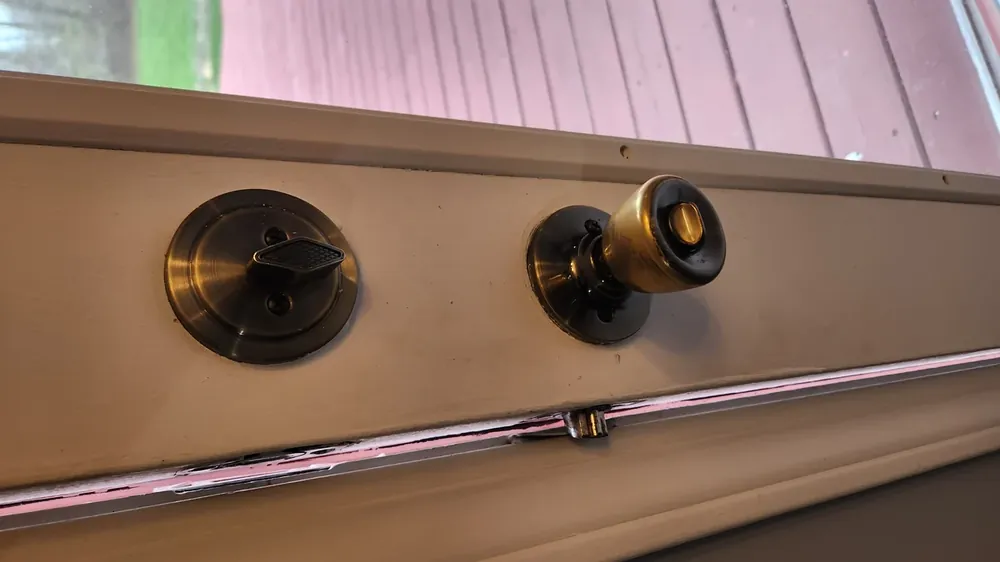
Keeping Track of Your Keys After Rekeying
After rekeying, label the new keys and note which door lock each one opens. Keeping a spare set in a lockbox means you never get locked out.
Knowing exactly how many keys exist is the whole point of rekeying a lock. Hand out new keys only to people you trust, and rekey the lock again if a key ever goes missing. Taking a minute to remove old keys from the ring keeps things clear.
How Long Does It Take to Rekey a Lock?
Your first time to rekey a lock takes about 20 to 30 minutes as you learn where each pin goes. After you rekey a lock once, the next lock takes closer to 10 minutes.
A locksmith can rekey a lock in a few minutes because they rekey locks all day. If you need six locks rekeyed before dark, a locksmith finishes far faster than a first-time DIY rekey, and the keys work the first try.
Taking your time is the trick. Rushing to rekey a lock is how pins get lost, so slow down and the rekeying goes smoothly.
Getting Your Locks Rekeyed for a New Home
When you buy a home, getting the locks rekeyed should be a day-one task. You do not know who holds old keys, so fresh keys protect the home right away.
You can rekey a lock yourself with a kit, or have all the locks rekeyed by a locksmith in one visit. Either way, every entry lock should get new keys before you move your things into the home.
Ask to have the locks rekeyed to a single key so one key opens the whole home. Keyed-alike rekeying is a small upgrade that makes daily life at home much easier.
Is Rekeying a Lock Safe for Home Security?
Rekeying a lock is just as secure as a new lock, as long as the lock is in good shape. The new pins and new keys mean old keys cannot open the door of your home.
For the best home security, rekey every exterior lock at the same time and keep the new keys in a safe place. Leaving one lock on old keys while you rekey the rest defeats the purpose, so get every lock rekeyed together. You can verify a locksmith through the Associated Locksmiths of America. Kwikset details how its SmartKey deadbolts let you rekey a lock yourself in seconds.