
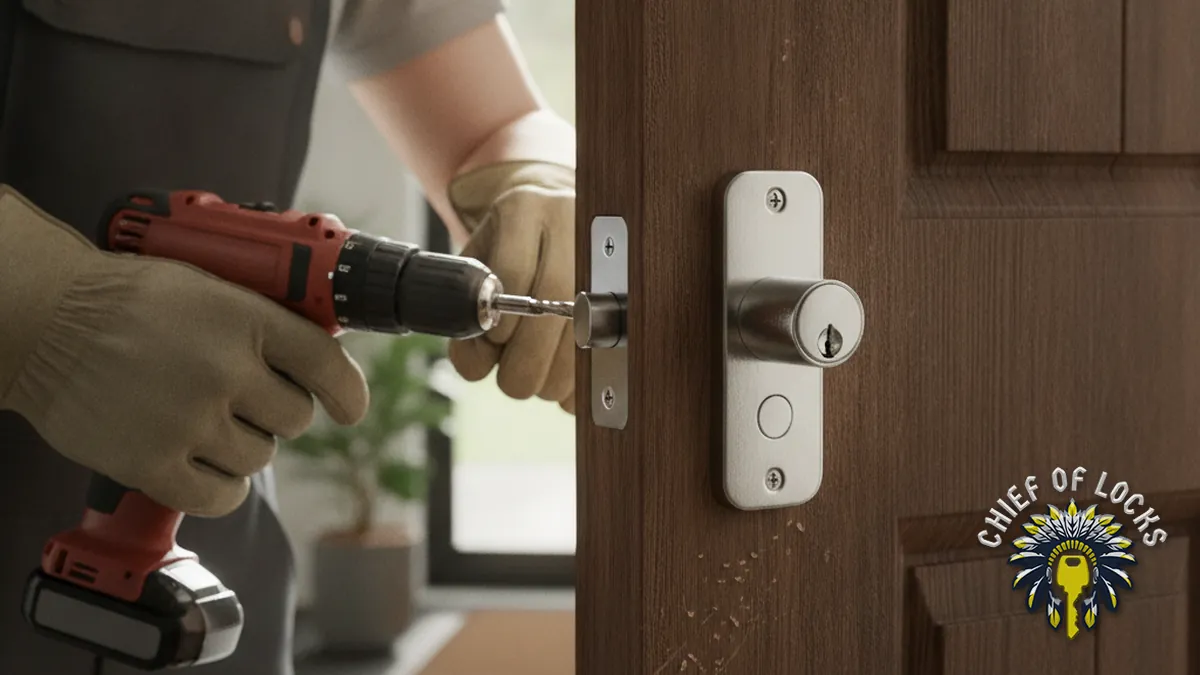
Quick answer: to install a door lock yourself you measure the door, drill two holes, fit the latch, mount the lock, and install the strike plate, in about 30 to 60 minutes. This step by step guide is for Indianapolis homeowners installing a new deadbolt or knob on a door.
Most door locks use a standard layout, so a new lock fits an existing door with basic tools. If your door has no holes yet, you will drill them with a hole saw.
Below are the tools, the measurements, the full step-by-step install, and when to call a locksmith instead.
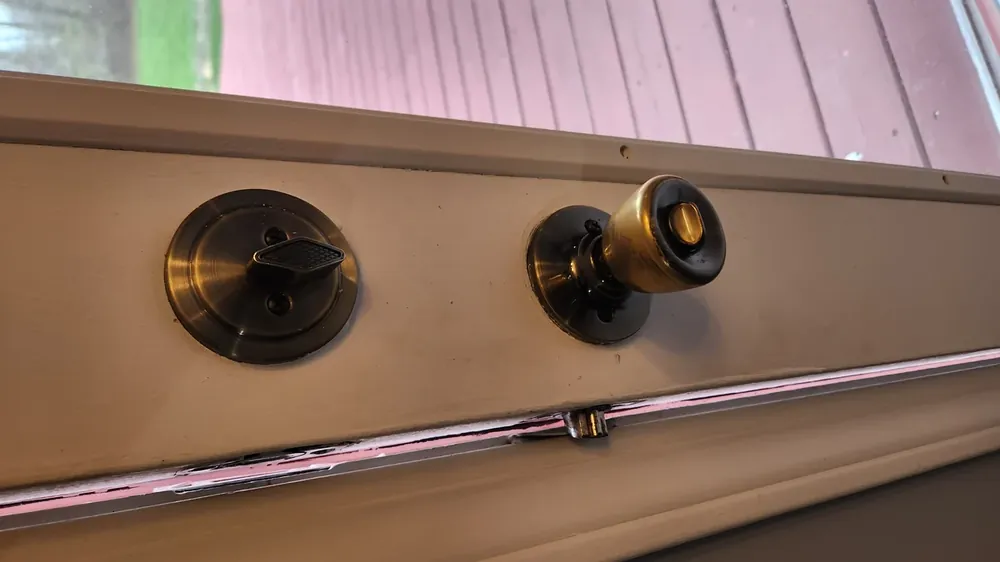
Tools and Materials You Need
Gather everything before you start so the install goes smoothly. You do not need many tools for a basic door lock.
- A drill with a 2-1/8-inch hole saw for the face hole
- A 1-inch spade bit for the latch hole in the door edge
- A 1-inch chisel and a hammer for the latch mortise
- A tape measure and a pencil to mark the holes
- A screwdriver for the connecting screws
- Safety glasses to wear during installation
- The new lock or deadbolt kit
Measure the Door First
Measurements matter, so check them before you drill. Standard door thickness for most residential doors is 1-3/8 inches or 1-3/4 inches.
Next, find the backset, which is the distance from the door edge to the center of the face hole. Common residential backset sizes are 2-3/8 inches and 2-3/4 inches.
Use the paper template in the lock kit to mark the door. Use a tape measure and pencil to mark the drilling locations on both the face and the edge of the door.
Step-by-Step Door Lock Installation
Work through each step in order. Take your time on the holes, since a clean hole makes the lock sit right.
Step 1: Mark the Holes
Tape the template to the door at the correct height. Mark the center of the face hole and the latch hole on the door edge with a pencil.
Step 2: Drill the Face Hole
Fit the 2-1/8-inch hole saw and keep the drill perpendicular to the door face to avoid misalignment. Drill halfway through from both sides to prevent splintering.
Step 3: Drill the Latch Hole
Switch to the 1-inch bit and drill straight into the door edge until you reach the face hole. Keep the bit level so the latch slides in flat.
Step 4: Chisel the Latch Plate Mortise
Slide the latch in and trace the latch plate on the door edge. Use the 1-inch chisel to cut a shallow mortise so the plate sits flush with the edge.
Step 5: Install the Latch
Set the latch into the edge hole with the beveled edge of the latch facing the door jamb. Fasten the latch plate with its screws.
Step 6: Mount the Lock
Fit the two halves of the lock through the face hole so the connecting screws line up. Tighten the screws evenly, and do not overtighten, since overtightened screws can compress internal components and cause binding.
Step 7: Install the Strike Plate
Close the door and mark where the latch meets the frame. Chisel a shallow mortise there, then screw the strike plate to the jamb so the latch catches cleanly.
Step 8: Test the Lock
Test the lock with the door open first, then closed. The key should turn smoothly and the latch should catch every time before you call the job done.
Lock Maintenance Tips
A new lock lasts longer with a little care. Simple maintenance keeps the key turning smoothly for years.
- Lubricate the lock mechanism once a year with graphite, not oil
- Use a small amount of graphite lubricant for stiff keys that are hard to turn
- Check the screws every few months to ensure they are tight
- Clean the lock periodically with a damp cloth
DIY Install vs Hiring a Locksmith
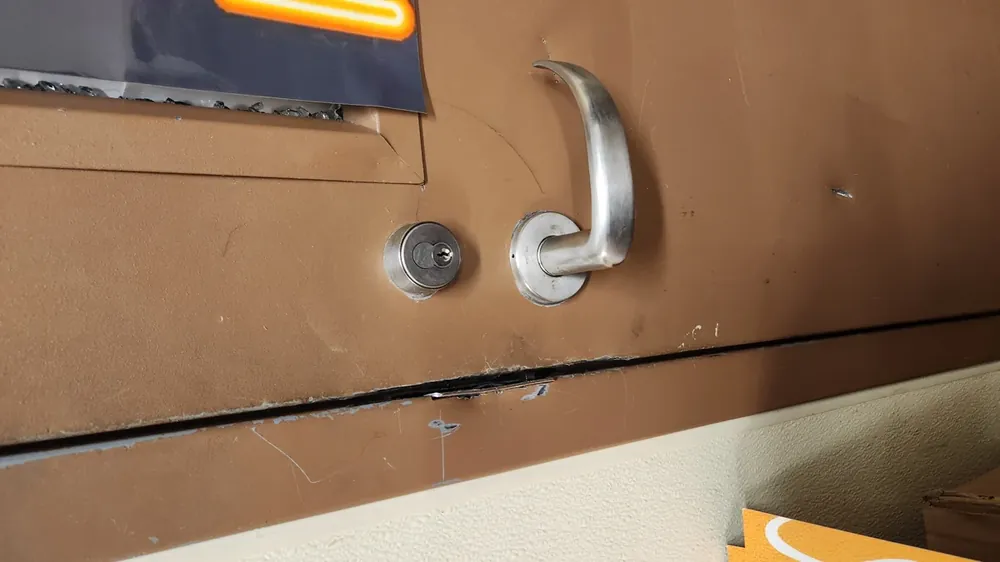
A basic knob or deadbolt is a fair DIY job if the door already has holes and you own a drill. Following the manufacturer's instructions gives the best results.
Call a locksmith when you want maximum security, a high-security lock, a smart lock, or a fresh hole in a solid or metal door. A locksmith installs the lock cleanly, aligns the strike, and makes sure the door is secure.
Chief of Locks installs and repairs door locks across Indianapolis. Call (317) 671-7873 if you would rather have a pro handle the new lock. You can verify a locksmith through the Associated Locksmiths of America. You can find a licensed, vetted locksmith through the trade group ALOA.